
Most people only look at what they’re getting. They rarely stop to think about what they’re giving up.
You buy the new phone — but what else could that money have done for you? You binge four hours of Netflix — but what could you have built, learned, or earned in that time instead? Every single “yes” you say is automatically a “no” to something else. That’s the part nobody talks about.
This is the foundation of the opportunity cost mindset — the practice of evaluating not just the value of what you choose, but the value of what you leave behind. It’s one of the most underrated tools for building wealth, and it costs nothing to learn.
Successful people don’t necessarily make better decisions because they’re smarter. They make better decisions because they’ve trained themselves to ask one simple question before acting: what am I giving up to get this?
In this article, you’ll learn what opportunity cost really means, why most people ignore it, and how to build an opportunity cost mindset that changes the way you spend your time, money, and energy. By the end, you’ll have a practical framework — plus a 30-day challenge — to start applying it immediately.
What Is Opportunity Cost?
Opportunity cost is the value of the next-best option you give up when you make a choice. It’s not a fancy economics term reserved for textbooks — it’s something you experience every single day, whether you notice it or not.
Here’s the simplest way to think about it: every choice has a visible cost and a hidden cost. The visible cost is the money you spend, the hours you use, or the effort you put in. The hidden cost is everything else you could have done with that same money, time, or effort.
Say you have $500 saved up. You could put it into an index fund, or you could spend it on a weekend trip. The trip isn’t wrong — but its real cost isn’t just $500. Its real cost is $500 plus whatever that money could have grown into over the next ten years.
This applies far beyond money:
- Time — Every hour spent scrolling is an hour not spent building a skill.
- Relationships — Every hour spent with people who drain you is an hour not spent with people who lift you up.
- Career — Every year spent in a job with no growth is a year not spent developing skills that pay more.
- Business — Every dollar spent on a low-return project is a dollar not invested in a high-return one.
Opportunity cost affects everyone, whether they’re aware of it or not. The difference between people who build wealth and people who stay stuck often comes down to whether they can see the hidden cost before they make the decision — not after.
Why Most People Never Think About Hidden Costs
If opportunity cost is so important, why doesn’t everyone factor it in? Because our brains are wired to notice what’s in front of us, not what’s missing.
Instant gratification. The brain rewards immediate pleasure far more strongly than delayed benefit. A new purchase feels good right now. Compound interest feels like nothing right now — even though it’s doing far more for your future.
Emotional decision-making. Most financial and career decisions aren’t made with logic. They’re made with emotion, then justified with logic afterward. Fear, boredom, and excitement drive far more decisions than most people admit.
Social pressure. Buying the same things as your friends, taking the “safe” job your family expects, or following a trend online all feel easier than making an independent decision — even when that independent decision would serve you better long-term.
Lack of long-term thinking. Most people plan their weekend. Few plan their next five years. Without a long-term picture, it’s almost impossible to evaluate whether today’s decision helps or hurts your future.
Comfort over growth. Growth requires temporary discomfort. Comfort feels safer in the moment, so people repeatedly choose comfort — and don’t notice the slow cost of staying the same.
None of this makes anyone weak or foolish. It makes them human. The good news is that opportunity cost thinking is a skill, not a personality trait. It can be built.
This is exactly where the opportunity cost mindset comes in. Instead of relying on willpower alone to resist instant gratification or social pressure, you build a simple habit of pausing and asking what a decision actually costs before you commit to it. That small pause interrupts the automatic, emotion-driven reaction that usually drives spending, procrastination, and comfort-seeking.
Over time, this pause becomes second nature. You stop reacting to impulses and start evaluating trade-offs, even when no one is watching. That shift — from reacting to evaluating — is often the biggest difference between people who build wealth steadily and people who stay stuck repeating the same financial patterns year after year.
The Opportunity Cost Mindset
The opportunity cost mindset is the habit of pausing before a decision to evaluate what you’re trading, not just what you’re gaining. People who build wealth consistently ask themselves a different set of questions than people who don’t.
Before spending money, time, or energy, they ask:
- What am I giving up? Every choice removes other choices. Naming what you’re giving up makes the trade-off visible instead of invisible.
- Is this helping my future self? Not “does this feel good now” — but “will the person I’m becoming thank me for this.”
- Is this the highest-value use of my time? Not every task deserves equal attention. Some activities move you forward fast; others barely move you at all.
- Will this decision compound over the next five years? Some choices are one-time events. Others compound — good or bad — for years.
This isn’t about overthinking every purchase or refusing to enjoy life. It’s about being intentional. A $15 coffee isn’t the problem. A pattern of decisions made without any thought for their hidden cost — that’s the problem.
7 Everyday Decisions That Have Hidden Costs
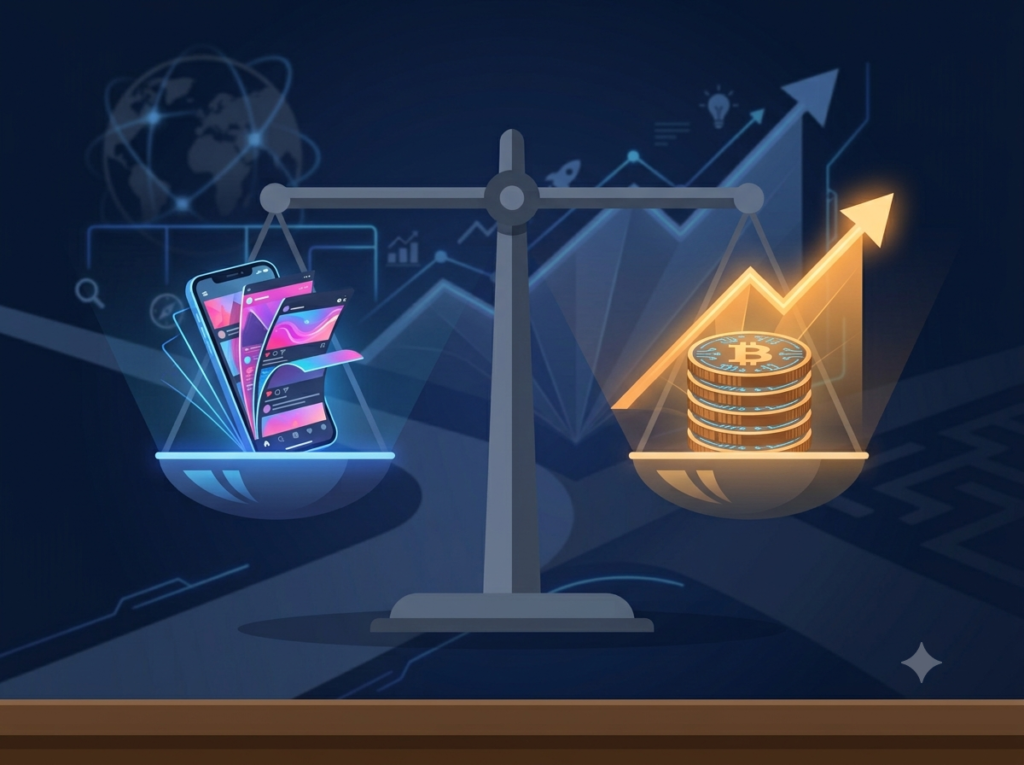
Here are seven common decisions where the hidden cost is usually bigger than the visible one. These aren’t rare, one-off choices — they’re patterns most people repeat weekly without ever noticing how much they compound over time.
1. Spending money on wants instead of investing
Immediate benefit: Instant enjoyment or status. Hidden cost: The growth that money could have generated if invested instead. Smarter alternative: Set a rule — for every non-essential purchase, invest an equal or smaller amount first. This keeps enjoyment and wealth-building working together instead of against each other.
2. Watching hours of entertainment instead of learning a valuable skill
Immediate benefit: Relaxation and stress relief. Hidden cost: Skills you could have built, income you could have started generating. Smarter alternative: Cap entertainment time and treat skill-building — writing, marketing, coding, sales — as a non-negotiable block in your week.
3. Staying in an unfulfilling job without developing new skills
Immediate benefit: Stability and predictable income. Hidden cost: Years of earning potential lost by not growing your skill set. Smarter alternative: Stay if you need the income, but use evenings and weekends to build the skills that will eventually replace that income on your terms.
4. Constantly switching goals instead of staying consistent
Immediate benefit: The excitement of starting something new. Hidden cost: Never reaching the compounding stage of any single skill or project. Smarter alternative: Commit to one major goal for a minimum of 90 days before evaluating whether to pivot.
5. Scrolling social media instead of creating content
Immediate benefit: Entertainment and connection. Hidden cost: The audience, income, and personal brand you could be building instead. Smarter alternative: Flip the ratio — for every 10 minutes of scrolling, spend 10 minutes creating.
6. Delaying difficult conversations or important decisions
Immediate benefit: Avoiding short-term discomfort. Hidden cost: Prolonged stress, missed opportunities, and problems that grow larger over time. Smarter alternative: Set a personal deadline for any decision you’ve been avoiding for more than two weeks.
7. Buying liabilities instead of building digital assets
Immediate benefit: Enjoyment of a new item or upgrade. Hidden cost: The digital asset — a course, an audience, a product — you could have built with that same time and money. Smarter alternative: Before a big purchase, ask whether that money or time could instead go toward something that keeps paying you back.
Opportunity Cost in Wealth Building
Every stage of wealth building involves an opportunity cost decision, whether people realize it or not.
- Saving — Every dollar saved is a dollar not spent, but every dollar spent is also a dollar not saved. The goal isn’t to save everything; it’s to save with intention.
- Investing — Money sitting in a low-yield account has a hidden cost: the growth it’s missing out on elsewhere.
- Starting a business — Time spent building a business has a cost — usually reduced free time or a slower path to a stable paycheck. But not starting has a cost too: years of income you never created.
- Learning high-income skills — Time spent learning has a short-term cost in hours. The long-term payoff is a higher ceiling on what you can earn.
- Building multiple income streams — Relying on one income source feels simpler, but it carries a hidden risk cost if that source disappears.
- Creating digital assets — Time spent building something once — a course, an ebook, a tool — can pay off repeatedly, unlike time traded directly for a paycheck.
None of these decisions are automatically “right.” The opportunity cost mindset isn’t about always choosing the more aggressive option. It’s about knowing exactly what you’re trading either way. The people who build lasting wealth aren’t the ones who avoid every trade-off — they’re the ones who make trade-offs on purpose.
Applying the opportunity cost mindset to these areas doesn’t require a finance background or a six-figure income to start. It simply means asking, before every saving, investing, or business decision, what you’re gaining and what you’re giving up in return. A freelancer weighing whether to take on a low-paying client, for example, can use this mindset to see that saying yes might cost them the time needed to pitch a higher-paying one.
A student deciding between a part-time retail job and building a small online store can use the same mindset to weigh short-term income against longer-term skill and asset building. The specific decision changes from person to person, but the underlying question stays the same: what am I trading, and is it worth it?
Opportunity Cost and Digital Business
People building online income think about opportunity cost differently than people with a traditional 9-to-5 mindset, because almost every resource — time, attention, energy — is limited and highly visible.
- Time — Successful creators treat time as their most valuable asset, often more valuable than money, because time can’t be earned back.
- Content creation — Every piece of content is measured against what else that time could have produced. Low-effort content that doesn’t perform has a real opportunity cost.
- Learning AI — Time spent learning how to use AI tools effectively is now one of the highest-leverage investments available, because it multiplies output across every other task.
- Networking — Time spent building real relationships with other creators or professionals often pays off more than the same hours spent working in isolation.
- Building systems — A system built once saves hundreds of future hours. The opportunity cost of not systemizing repetitive tasks adds up fast.
- Delegation — Every hour spent on a task someone else could do for less is an hour not spent on higher-value work only you can do.
The common thread: people who build successful digital businesses are constantly asking what the best use of their next hour is — not just what feels productive.

Common Opportunity Cost Mistakes
Even people who understand opportunity cost in theory still fall into these traps.
- Chasing quick money — Trading long-term asset building for short-term cash, then having to start over later.
- Comparing yourself with others — Making decisions based on someone else’s path instead of your own goals.
- Fear of missing out (FOMO) — Jumping into trends or opportunities without evaluating what you’re giving up to chase them.
- Overcommitting — Saying yes to too many projects, which quietly lowers the quality and impact of all of them.
- Never saying no — Every yes has a cost. Saying yes to everything guarantees you’ll say no to your own priorities by default.
- Ignoring compound growth — Underestimating how small, consistent decisions compound into large outcomes over years.
How to Develop an Opportunity Cost Mindset
Building this mindset doesn’t require a finance degree. It requires a habit of asking better questions before you act.
Before any significant decision, ask:
- What am I sacrificing? Name it specifically — money, time, energy, or an alternative opportunity.
- What could I gain if I chose differently? Consider the realistic upside of the alternative, not just the fantasy version.
- Will this matter in one year? This filters out decisions driven by short-term emotion.
- Does this move me closer to financial freedom? Not every decision needs to — but too many decisions that don’t will slow you down.
- Is this decision aligned with my long-term goals? If you don’t have long-term goals written down yet, this is the moment to create them.
This framework works because it turns an invisible cost into a visible one. Once you can see the trade-off clearly, better decisions become much easier to make.
A 30-Day Opportunity Cost Challenge
Reading about opportunity cost is one thing. Practicing it is what actually changes your financial trajectory. Here’s a simple four-week challenge to build the habit.
Week 1: Track how you spend time. Keep a simple log of your hours for seven days. Don’t change anything yet — just observe where your time actually goes.
Week 2: Audit unnecessary expenses. Review your spending from the past month. For every non-essential expense, ask what else that money could have done.
Week 3: Eliminate low-value activities. Pick two habits from your time log that gave you the least return — in growth, income, or genuine enjoyment — and remove or reduce them.
Week 4: Invest more in learning and asset building. Redirect the time and money you freed up in weeks 2 and 3 into one skill, project, or investment that compounds. Review your decisions from the past 30 days and note what you’d do differently.
By the end of the month, you won’t just understand opportunity cost — you’ll have proof of what changes when you apply it.

Key Takeaways
- Opportunity cost is the value of what you give up every time you make a choice, whether you notice it or not.
- Most people ignore hidden costs because of instant gratification, emotional decisions, social pressure, and comfort.
- The opportunity cost mindset means asking what you’re sacrificing before asking what you’re gaining.
- Everyday decisions — spending, entertainment, career choices, social media use — all carry hidden costs that compound over time.
- Wealth building, investing, and digital business all involve constant opportunity cost trade-offs.
- A simple five-question framework can turn invisible trade-offs into clear, intentional decisions.
- Small, consistent choices compound into major financial outcomes over years, not days.
Wealth isn’t only built by earning more. It’s built by consistently choosing the option that costs you less in the long run — even when it feels harder right now. The opportunity cost mindset won’t make every decision easy, but it will make every decision clearer.
Pick one decision you’re facing today. Ask what you’re really giving up. Then choose on purpose.