
Introduction
You know you should save more. You know you should invest instead of spend. You know that scrolling for two hours does nothing for your future. Yet most of us still choose the easy, instant option over the one that actually pays off later.
This isn’t a willpower problem. It’s a wiring problem.
Every app on your phone, every notification, every “buy now, pay later” button is engineered to make instant gratification feel irresistible. Your brain didn’t evolve for a world full of one-click purchases and infinite scroll — it evolved to grab rewards now, because “later” used to be uncertain. Food spoiled, danger appeared without warning, and waiting around for a bigger reward sometimes meant getting nothing at all.
That ancient wiring hasn’t gone away. It’s just been hijacked by an economy built entirely around capturing your attention and your money in the moment.
That’s exactly why delayed gratification has become one of the most reliable predictors of long-term financial success. It’s not flashy. It’s not exciting. But it’s the quiet skill behind almost every person who has built real, lasting wealth — and it’s also the skill most people quietly struggle with the most.
In this article, you’ll learn what delayed gratification actually means, why your brain resists it, how it connects directly to building wealth, what research really says about it, and the myths that keep people from practicing it correctly. Most importantly, you’ll get seven practical ways to build this skill into your daily life, whether you’re a student, a freelancer, an employee, or someone growing a digital business from scratch.
What Is Delayed Gratification?
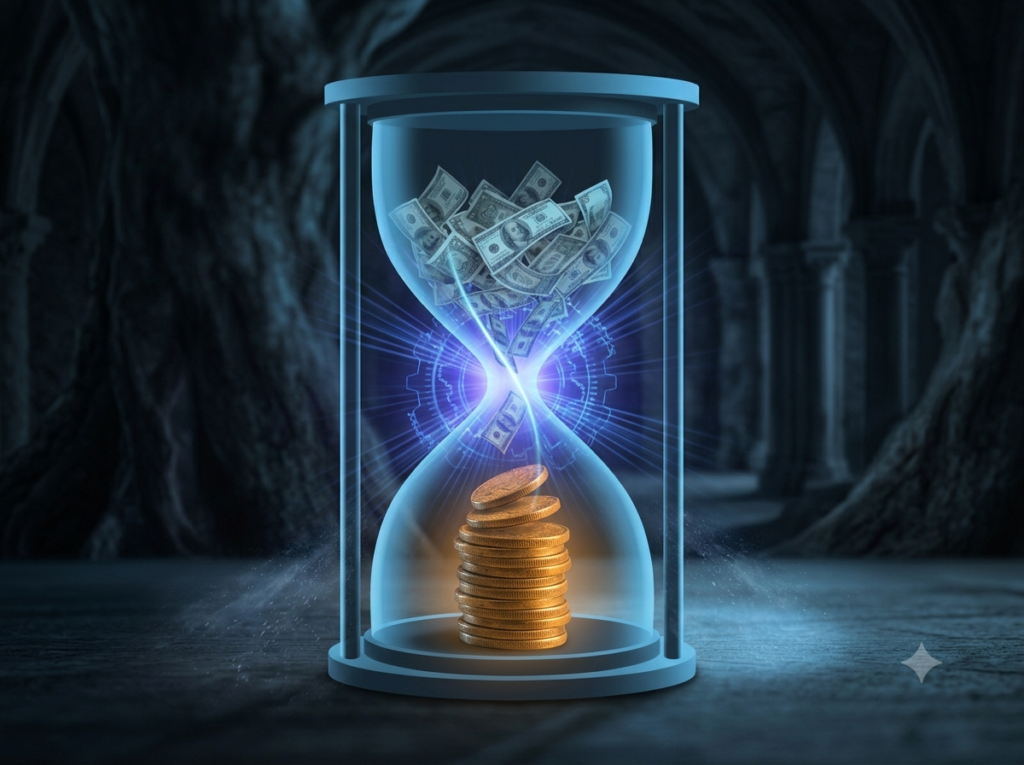
Delayed gratification is the ability to resist a smaller reward now in order to receive a larger reward later. It’s choosing to invest $200 instead of spending it on something fun this weekend. It’s spending a year learning a skill before it pays off, instead of chasing a “get rich quick” shortcut that promises results overnight.
It sounds simple on paper. In practice, it’s one of the hardest skills to develop, because nearly everything around you is designed to reward the opposite behavior. Notifications, sales, one-click checkouts, and endless content feeds all push you toward acting now and thinking later.
People with strong financial discipline aren’t necessarily smarter or more talented than everyone else. They’ve simply trained themselves to tolerate short-term discomfort in exchange for long-term gain. That single skill compounds into almost every area of life — money, health, relationships, and career — which is exactly why it shows up so often in stories of people who build lasting wealth.
It’s worth being clear about what this skill is not. It isn’t about suffering through life or denying yourself anything enjoyable. It’s about sequencing your choices so the things you want most in the long run aren’t constantly sacrificed for things you want right now.
Why Our Brains Prefer Instant Rewards
Your brain runs on a chemical called dopamine, which is released when you anticipate a reward — not just when you actually receive it. That’s why even opening Instagram or checking your phone triggers a small dopamine hit before you’ve seen a single post or notification.
Here’s the problem: dopamine doesn’t care whether the reward is good for you long-term. It only cares that something feels good right now. This is the exact mechanism that makes instant gratification so addictive and so hard to resist using willpower alone.
This creates a constant tug-of-war inside your decision-making:
- Short-term pleasure feels immediate, certain, and easy to access.
- Long-term consequences feel distant, uncertain, and abstract.
When your brain compares a guaranteed reward today against a possible reward years from now, today almost always wins — unless you’ve deliberately trained yourself to think differently. Researchers call this “present bias,” and it’s wired into all of us, not just people who struggle with money.
That training is what separates people with strong self-discipline from people who stay stuck in cycles of impulse decisions. The good news is that this isn’t about having a special kind of brain. It’s about building habits and environments that work with your brain’s wiring instead of constantly fighting against it.

The Link Between Delayed Gratification and Wealth
Wealth is rarely built through one big decision. It’s built through thousands of small ones, repeated consistently over years. Delayed gratification shows up in almost every single one of them, often in ways people don’t consciously notice.
Saving money requires choosing not to spend today so you have options tomorrow. Every time you skip an unnecessary purchase and move that money into savings, you’re practicing this skill in real time. Investing requires tolerating short-term market dips and slow account growth for long-term compound growth that only becomes obvious after years of consistency.
Building a business requires months — sometimes years — of unpaid or underpaid effort before it generates real, reliable income. Most people quit during this stretch, not because the idea was wrong, but because they expected results faster than reality allows.
The same pattern applies to learning valuable skills. Coding, copywriting, sales, design, public speaking — none of these pay off in week one. They pay off after sustained, often unglamorous practice that doesn’t feel rewarding until much later.
This applies directly to digital business too. Creating digital assets like ebooks, templates, or online courses means working now for income that arrives later — and often keeps arriving long after the initial work is finished. That delay between effort and reward is the entire point. It’s what turns short-term effort into long-term thinking that compounds, instead of one-time effort that disappears the moment you stop.
Career growth follows the same pattern. The people who get promoted, get noticed, or get access to bigger opportunities are usually the ones who kept showing up and improving long after the work stopped feeling exciting or new.
The Hidden Cost of Instant Gratification
Choosing instant rewards doesn’t just slow down your progress — it actively works against your financial future, often in small ways that are easy to dismiss individually. A few common patterns worth recognizing:
- Impulse spending – Buying things to feel good in the moment, then feeling worse once the bill or credit card statement arrives.
- Social media addiction – Trading hours of your day for small dopamine hits that leave nothing behind once the scrolling stops.
- Chasing quick-money schemes – Jumping into the latest “guaranteed” trend instead of building a real skill, audience, or asset.
- Giving up too early – Quitting a business, skill, or investment right before it would have started paying off.
- Constant distraction – Switching between tasks so often that nothing important ever actually gets finished.
None of these feel dramatic in the moment. That’s exactly what makes them dangerous. They’re small leaks that, repeated for months or years, quietly drain your time, money, and momentum without ever feeling like a single “big mistake.”
The irony is that most financial regret doesn’t come from one bad decision. It comes from hundreds of small decisions that all favored the present moment over the future — and delayed gratification is the direct antidote to that pattern.
What Research Says About Delayed Gratification
The most famous study on this topic is the “marshmallow test,” conducted by psychologist Walter Mischel in the late 1960s. Children were offered one marshmallow immediately, or two marshmallows if they were willing to wait about fifteen minutes. Years later, follow-up research found that the children who waited tended to show stronger academic performance, better emotional regulation, and healthier life outcomes overall.
More recent research has added important nuance to this finding. The ability to delay gratification isn’t purely innate or fixed at birth. It’s heavily shaped by environment, trust, and whether rewards in someone’s life have historically been reliable. Children who grew up in unpredictable environments, for example, often learned that waiting wasn’t safe, because promised rewards didn’t always show up. In other words, delayed gratification is a trainable skill, not a fixed personality trait you either have or don’t have.
Behavioral economists have also found that people consistently undervalue future rewards compared to immediate ones — a well-documented pattern called present bias. Understanding that this bias is built into human psychology, rather than being a personal flaw or character weakness, makes it much easier to design systems that work around it instead of relying purely on willpower in the moment.
This shift in framing matters more than it might seem. If you believe delayed gratification is something you either naturally have or don’t, you’ll give up the first time you struggle with it. If you understand it as a skill shaped by habits and environment, you’ll start building the systems that actually make it easier.
7 Practical Ways to Strengthen Delayed Gratification
You don’t build this skill through motivation alone. Motivation is unreliable and tends to disappear exactly when you need it most. You build delayed gratification through structure, environment, and small repeated habits. Here are seven ways to start.
1. Create friction for bad habits.
Make impulsive choices slightly harder to act on. Delete the shopping app from your phone. Remove saved card details from checkout pages. Add a 24-hour rule before any non-essential purchase over a certain amount.
2. Reward long-term progress.
Celebrate the process, not just the final outcome. Treat yourself for hitting a savings milestone, finishing a course module, or publishing ten pieces of content — not simply for spending money on something unrelated to your goals.
3. Set identity-based goals.
Instead of telling yourself “I want to save more,” try reframing it as “I’m someone who pays my future self first.” Identity-based habits tend to stick far longer than outcome-based ones, because they shape decisions automatically instead of requiring constant willpower.
4. Build systems instead of relying on willpower.
Automate your savings and investments so the decision is made once instead of every single payday. Willpower runs out by the end of a long, tiring day; automated systems never do.
5. Practice mindful spending.
Before buying something, pause and ask whether it genuinely aligns with your goals or is just an emotional reaction to stress, boredom, or comparison. This single habit alone strengthens financial discipline faster than almost anything else.
6. Track long-term progress.
Use a simple spreadsheet, app, or notebook to track your net worth, savings rate, or skill growth over months. Seeing slow, steady progress visually makes it feel real, which makes it much easier to keep going during periods when nothing seems to be happening.
7. Celebrate consistency over perfection.
Missing one day doesn’t erase your progress, and one bad financial decision doesn’t undo months of good ones. What matters is getting back on track quickly. Habit building is about the overall trend line, not maintaining a flawless streak.
How Delayed Gratification Helps Digital Entrepreneurs
Almost every successful path to online income runs through a long stretch of effort that doesn’t pay off right away, and entrepreneurs who understand this upfront tend to last far longer than those who don’t.
Building a blog often takes six to twelve months before it generates meaningful, consistent traffic. Most blogs that “fail” simply stopped a few months before they would have started gaining real momentum. Growing a YouTube channel can take dozens of videos before the algorithm starts actively working in your favor, and most creators quit well before that point.
Affiliate marketing rarely converts well until you’ve built genuine trust with an audience over time. People buy from creators they’ve followed for months, not strangers they discovered yesterday. Creating digital products — courses, templates, ebooks, planners — requires upfront work with zero guarantee of sales on day one, which is exactly why so many people abandon the idea before it has a real chance to work.
Learning high-income skills like copywriting, design, or development means investing dozens or hundreds of hours into practice before you’re skilled enough to charge premium rates for the result. There’s no shortcut around this stage, only ways to make the process more efficient.
The entrepreneurs who eventually build multiple income streams are almost never the ones chasing the fastest possible win. They’re the ones who treated the first months of “no results” as the expected cost of entry, not as a sign that something was broken or that they should quit.
This is where a genuine mindset for success really shows up — not in confidence, hype, or hustle culture slogans, but in the quiet, often invisible decision to keep showing up while the results are still nowhere to be seen.
Common Myths About Delayed Gratification
Myth 1: It means never enjoying life.
Delayed gratification isn’t about deprivation or constant sacrifice. It’s about being intentional with timing. You can still enjoy your life, take trips, and spend on things you love — you just stop letting every small impulse hijack your bigger, more important goals.
Myth 2: Successful people simply have more willpower.
Most successful people rely far less on raw willpower than people assume from the outside. They rely on systems, habits, and environments that make the right choice the easy, default choice, removing the need for constant self-control.
Myth 3: Results should happen quickly.
Social media makes overnight success look common and normal. It isn’t. Most visible “overnight” wins are actually the result of years of invisible groundwork that nobody saw until the results finally became public.
A 30-Day Delayed Gratification Challenge

Use this simple, structured framework to build the habit over one focused month.
Week 1: Awareness
Track every impulse purchase and distraction without judgment. Just notice the pattern of when and why these moments happen, so you understand your own triggers clearly.
Week 2: Friction
Add small barriers to your top three impulsive habits — delete tempting apps, remove saved payment information, and unsubscribe from marketing emails designed to trigger impulse buying.
Week 3: Systems
Automate one savings or investing transfer so it happens without requiring a decision each time. Schedule one hour of focused skill-building or business work, at least three times this week.
Week 4: Reflection
Review your progress honestly. Note what felt difficult, what got noticeably easier, and choose one habit from this month to keep permanently as part of your routine.
By the end of 30 days, you won’t feel like a completely different person — but you’ll have real proof that delayed gratification is a skill you can actually build through practice, not a fixed trait you either have or don’t.
Key Takeaways
- Delayed gratification is a trainable skill, not a fixed personality trait you’re stuck with.
- Dopamine rewards immediate action, which is why instant gratification feels easier than long-term thinking.
- Saving, investing, and building a business all depend on tolerating short-term discomfort for long-term gain.
- Systems and friction work far better than relying on willpower alone, especially under stress.
- Digital entrepreneurs succeed by treating early “no results” periods as normal, not as failure.
- Small, consistent decisions — repeated over years — are what actually build lasting wealth.
Conclusion
Wealth isn’t built through one dramatic decision. It’s built through hundreds of small, boring choices made consistently over years — and delayed gratification is the underlying skill that makes those choices possible in the first place.
You don’t need more motivation, more hype, or more discipline as a personality trait. You need fewer impulsive decisions and a few simple systems that make the long-term choice the easy choice, almost by default.
So pick one area of your life right now — spending, saving, skill-building, or your digital business — and choose the delayed reward today instead of the instant one. Future you is counting on it.