Many beginners think investing starts with picking a stock. In reality, successful investing starts with something less exciting but far more important: building the right structure around your money. That structure is your first investment portfolio, and how you build it will matter more to your long-term results than any single stock pick ever will.
If you’ve been putting off investing because you don’t know where to start, you’re not alone. Most beginners freeze up trying to find the “perfect” investment instead of learning how to build a portfolio that can grow steadily over time. This guide walks you through exactly how to build your first investment portfolio, step by step, without the jargon or the guesswork.
By the end of this guide, you’ll understand exactly what belongs in a first investment portfolio, how to structure one around your own goals, and how to avoid the mistakes that trip up most beginners in their first year of investing.
There’s no single “right” way to build one, but there is a right process. That process starts with understanding what a portfolio actually is, why it matters, and then working through a clear set of steps that turn a vague intention to invest into an actual plan.
What Is an Investment Portfolio?
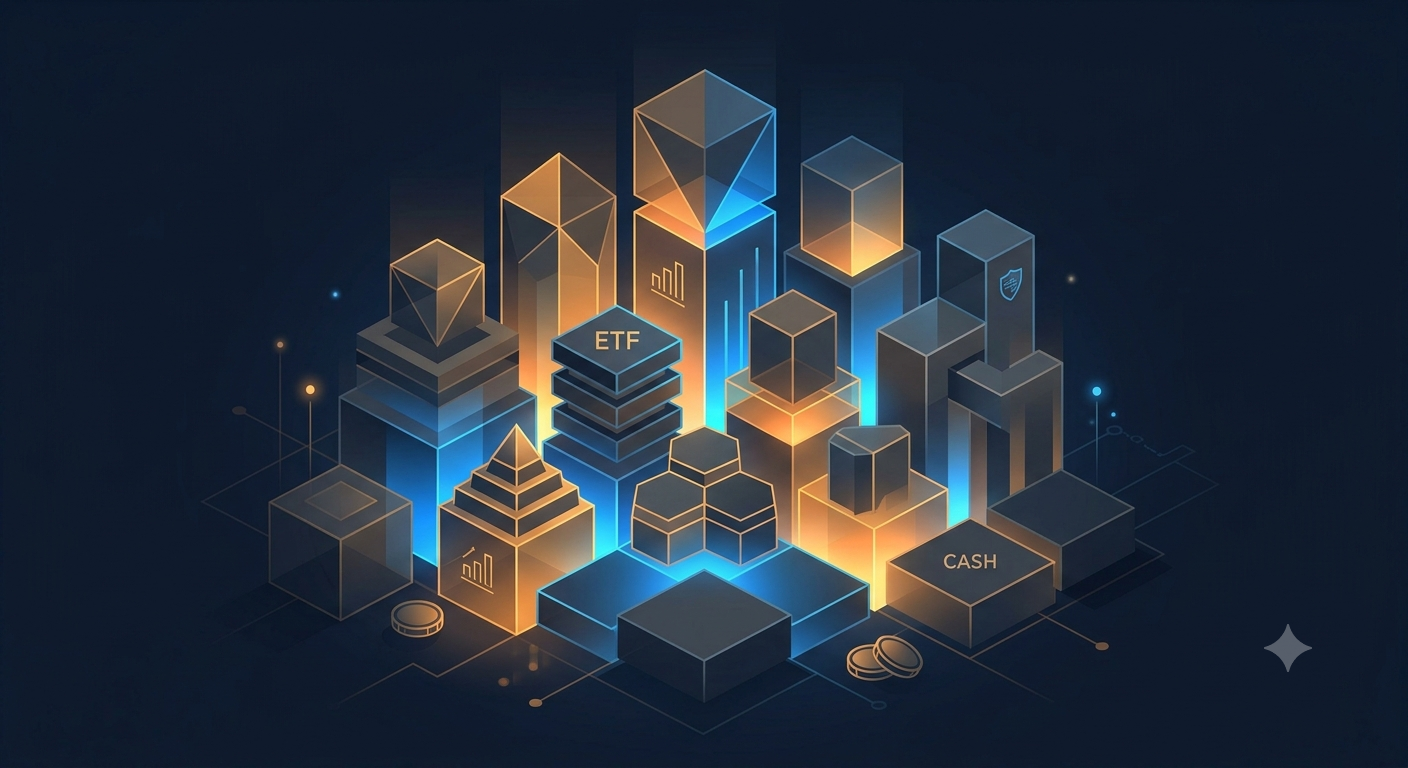
An investment portfolio is simply the full collection of assets you own for the purpose of growing your wealth. That can include stocks, ETFs, bonds, cash, and even cryptocurrency. Think of it less like a single tool and more like a toolbox — each asset plays a different role, and together they help you handle whatever the market throws at you.
A useful way to picture this is a kitchen pantry. You don’t stock your pantry with only one ingredient, because one ingredient can’t make a complete meal. You stock it with a mix of items that work together. Your first investment portfolio works the same way — it’s a mix of assets designed to work together toward one goal: building wealth over time.
Every investor, no matter how much money they start with, needs some version of a portfolio. Without one, you’re not investing — you’re just buying things and hoping for the best.
This distinction matters most for beginners. A first investment portfolio isn’t defined by how much money is in it — it’s defined by whether there’s a plan behind it. Two people can each invest the same amount of money, but the one with a structured portfolio is far more likely to reach their goals than the one who’s just buying whatever looks promising that week.
That’s really the whole purpose of this guide: to help you move from scattered buying decisions to a genuine, intentional portfolio built with a plan from day one.
Why Building Your First Investment Portfolio Matters
A well-built portfolio does four things that random investing can’t.
First, it reduces risk. When your money is spread across different types of assets, a downturn in one area doesn’t sink your entire financial future. Second, it improves your decision-making. When you have a plan, you’re less likely to make impulsive moves based on headlines or social media hype.
Third, a portfolio supports long-term wealth creation. Wealth is rarely built from one lucky trade — it’s built from years of consistent, structured investing. Fourth, having a plan reduces emotional investing. Fear and excitement are the two biggest reasons beginners lose money, and a solid portfolio structure gives you something to lean on when emotions run high.
Building your first investment portfolio the right way from the start also saves you time later. Investors who begin with a scattered mix of random purchases often have to spend months untangling and reorganizing their holdings once they realize they never had a real strategy. Starting with structure means you skip that costly cleanup phase entirely.
How to Build Your First Investment Portfolio in Six Steps
Building a portfolio isn’t complicated once you break it into stages. The six steps below take you from having no plan at all to having a fully structured, diversified portfolio you can maintain for years.
Why Your First Investment Portfolio Should Be Built in Stages
Trying to build a first investment portfolio all at once often leads to overwhelm, which is a big reason so many beginners never actually start. Breaking the process into stages makes each decision smaller and easier to commit to, and it means you can start investing before every detail is perfectly figured out.
Step 1: Define Your Financial Goals

Before you invest a single dollar, get clear on what you’re investing for. Your goals will shape almost every decision you make about your first investment portfolio.
Short-term goals (under 3 years) include things like an emergency fund or a vacation. These goals usually don’t belong in the stock market, since you need that money to be stable and accessible.
Medium-term goals (3–7 years) might include a home down payment or starting a business. These can sometimes include a mix of safer investments and some growth assets.
Long-term goals (7+ years) include retirement or long-term wealth building. These goals can typically handle more growth-focused investments, since you have time to ride out market ups and downs.
Your timeline directly affects how much risk makes sense for you. The longer your timeline, the more room you generally have to invest in growth assets.
Write your goals down before moving to the next step. A portfolio built around clear, written goals is far easier to stick with than one built around a vague idea of “wanting to invest someday.”
Step 2: Understand Your Risk Tolerance
Risk tolerance is how comfortable you are watching your investments go up and down in value. It’s different for everyone, and there’s no universally “correct” answer.
- Conservative investors prefer stability and are uncomfortable with big swings in value, even if it means slower growth.
- Moderate investors can handle some ups and downs in exchange for stronger long-term growth potential.
- Aggressive investors are comfortable with significant short-term volatility because they’re focused on long-term results.
Your age, income stability, and time horizon all influence where you land on this spectrum. Someone in their twenties with decades until retirement generally has more room to accept short-term volatility than someone nearing retirement. This isn’t personalized financial advice — it’s simply how risk tolerance tends to work, and understanding your own comfort level is a key step before you build a diversified portfolio.
There’s no shame in being a conservative investor, even as a beginner. The goal of this step isn’t to talk yourself into more risk than you’re comfortable with — it’s to be honest about what you can handle so your first investment portfolio actually matches your temperament, not just a number on a chart.
Step 3: Learn About Different Asset Classes
Your first investment portfolio will likely include a mix of the following:
- Stocks — ownership shares in individual companies, offering high growth potential but also higher volatility.
- ETFs — baskets of many stocks or bonds bundled into a single investment, making them a popular tool for beginner investing.
- Bonds — loans you make to governments or companies in exchange for interest payments, generally more stable than stocks.
- Cryptocurrency — a newer, highly volatile asset class that some investors use as a small, high-risk portion of their portfolio.
- Cash — money held in savings or cash-equivalents, providing safety and liquidity but little growth.
Each asset class plays a different role. Stocks and ETFs typically drive long-term growth. Bonds and cash provide stability. Crypto, if used at all, is generally treated as a small, higher-risk slice rather than a core holding.
You don’t need to master every asset class before you start. Most beginners build their first investment portfolio around a core of stocks and ETFs, then add bonds, cash, or crypto later as they get more comfortable and their goals become clearer.
How Much Money Do You Need for a First Investment Portfolio?
One of the biggest myths that stops beginners from starting is the idea that you need thousands of dollars to open a first investment portfolio. In reality, many brokerages now let you begin with just a few dollars, thanks to fractional shares and no-minimum accounts.
What matters far more than your starting amount is getting the structure right from day one. A first investment portfolio built with $50 and a clear plan will typically outperform, over time, a much larger sum of money thrown at random investments without any strategy behind it. Start with what you have, and let consistency build the rest.
Step 4: Build a Diversified Portfolio
Diversification means spreading your money across different assets so that no single investment can seriously damage your financial future. This is the core principle behind portfolio diversification, and it’s one of the most important habits for any beginner.
Asset allocation is the specific mix of asset classes you choose — for example, how much goes into stocks versus bonds versus cash. There’s no single “correct” allocation for everyone, since it depends on your goals, timeline, and risk tolerance.
Here’s a simple way to picture diversification. Imagine four friends who each open a small business. If you invest all your money in just one friend’s business, your entire financial outcome depends on that one venture succeeding. If you instead put a smaller amount into each of the four businesses, one failure won’t wipe you out, and you still benefit if any of the others succeed. That’s the entire idea behind avoiding putting all your money into one investment.
| Asset Class | Typical Role | Volatility Level |
|---|---|---|
| Stocks | Long-term growth | High |
| ETFs | Diversified growth | Medium-High |
| Bonds | Stability and income | Low-Medium |
| Cash | Safety and liquidity | Very Low |
| Cryptocurrency | Small, high-risk growth | Very High |
Step 5: Start Investing Consistently

Once your first investment portfolio has a structure, the next step is simple: keep investing on a regular schedule. This strategy is called dollar-cost averaging, and it means investing a fixed amount of money at regular intervals, regardless of what the market is doing.
Monthly investing takes the pressure off trying to predict short-term market moves. Some months you’ll buy when prices are high, other months when prices are low, and over time this tends to average out.
Consistency almost always beats timing. Very few investors, professional or beginner, can reliably predict short-term market movements. What you can control is showing up every month and adding to your portfolio.
This consistency is also what allows compound growth to work in your favor. Compound growth happens when your investment returns start generating their own returns. The earlier and more consistently you invest, the more time compound growth has to work.
This is where a first investment portfolio really starts to pay off. The portfolio itself doesn’t create wealth on day one — it’s the combination of a solid structure and years of consistent contributions that eventually does the heavy lifting.
Step 6: Review and Rebalance Your Portfolio
Building your first investment portfolio isn’t a one-time task. Markets shift, and over time your original asset allocation can drift away from your target.
A portfolio review means checking in periodically — often once or twice a year — to see whether your investments still match your goals and risk tolerance. Rebalancing means adjusting your holdings back toward your original target allocation, usually by shifting new contributions rather than selling everything.
The goal of rebalancing is to stay aligned with your long-term plan, not to chase whatever is performing best right now. Avoid the temptation to constantly trade based on short-term performance — unnecessary trading tends to increase costs and reduce long-term returns.
Think of this step as maintenance, not a redesign. A first investment portfolio that’s been thoughtfully built rarely needs major changes — small, periodic adjustments are usually enough to keep it working the way you originally intended.
Common Mistakes Beginners Make

Even a well-planned first investment portfolio can get derailed by a handful of predictable mistakes. Recognizing these early can save you years of frustration and unnecessary losses.
- Investing based on social media hype. A trending stock or coin isn’t a strategy.
- Trying to get rich quickly. Long-term investing rewards patience, not urgency.
- Lack of diversification. Putting everything into one asset increases your risk unnecessarily.
- Panic selling. Selling during a downturn locks in losses that might have recovered over time.
- Ignoring risk. Every investment carries risk, and pretending otherwise leads to poor decisions.
- Buying investments they don’t understand. If you can’t explain what you own, you shouldn’t own it yet.
- Checking the market every day. Constant monitoring increases anxiety and encourages impulsive decisions.
Most of these mistakes come from the same root cause: reacting instead of following a plan. A well-structured first investment portfolio is designed to make reacting unnecessary, since your strategy already accounts for both good and bad market conditions.
Example of a Beginner Investment Portfolio
Here’s a simple, illustrative example of how different asset classes might work together inside a beginner investment portfolio. This is for educational purposes only and is not a recommendation of exact percentages or specific investments.
A beginner focused on long-term growth might hold a mix of ETFs for broad market exposure, individual stocks for targeted growth, a smaller allocation to bonds for stability, and a modest cash position for flexibility. Someone with a lower risk tolerance might lean more heavily toward bonds and cash, while someone with a higher risk tolerance and a longer timeline might lean more heavily toward stocks and ETFs.
The exact mix isn’t the point. The point is that the portfolio includes multiple asset classes working together, rather than one single bet.
This is ultimately what separates a real first investment portfolio from a random collection of purchases: intention. Every holding has a reason for being there, and every reason ties back to the goals and risk tolerance you defined in the earlier steps.
Conclusion
Building your first investment portfolio doesn’t require perfect timing or insider knowledge. It requires a clear set of goals, an honest look at your risk tolerance, a diversified mix of assets, and the discipline to invest consistently over time.
Focus on the process, not on chasing quick wins. The investors who build lasting wealth are rarely the ones who found one perfect stock — they’re the ones who built a solid portfolio and stuck with their plan through every market cycle. Start small if you need to, but start with structure, and let consistency and time do the rest.
Your first investment portfolio doesn’t need to be perfect on day one. It needs to exist, and it needs a plan behind it. Everything else — the fine-tuning, the rebalancing, the growth — happens over time, one consistent contribution at a time.
Remember that a first investment portfolio isn’t judged by how it performs in its first month or even its first year. It’s judged by whether it’s still standing, still diversified, and still aligned with your goals five or ten years from now. Markets will rise and fall along the way, and that’s normal, not a sign that something has gone wrong. The beginners who succeed long-term are the ones who treat investing as a habit rather than an event. Keep showing up, keep contributing, and trust that a well-built portfolio, given enough time, tends to reward patience far more than it rewards perfection.
This article is for educational purposes only and should not be considered personalized financial advice. Investing involves risk, including the potential loss of principal. Consider consulting a licensed financial professional before making investment decisions.