Table of Contents
- Introduction
- What AI Actually Does
- Why Ownership Creates Wealth
- The Difference Between Workers and Owners
- Digital Assets Anyone Can Build
- How AI Helps You Build Faster
- Mistakes Beginners Make
- A Practical Roadmap
- The Future of AI and Ownership
- Conclusion
- FAQs
Introduction
Scroll through social media for five minutes, and you will find someone promising that AI doesn’t make you rich the old way—it makes you rich instantly. New tools, new prompts, new “AI side hustles” appear every week, and the hype keeps growing. But here is the truth that most of these posts skip: AI doesn’t make you rich by itself, no matter how powerful the tool becomes.
Thousands of beginners are learning this the hard way. They buy AI courses, subscribe to every new app, and wait for income that never arrives. Meanwhile, a smaller group of people quietly builds websites, brands, and digital products—and they are the ones actually getting paid.
This article breaks down why AI doesn’t make you rich on its own, and why ownership of digital assets is the real engine behind long-term wealth. You will learn what AI is genuinely good for, which assets create lasting income, and a practical roadmap you can start today, even as a complete beginner.
More importantly, you will see why the excitement around AI entrepreneurship often distracts people from the one principle that has built wealth for decades: owning something valuable. Tools change constantly, but the underlying economics of ownership rarely do. Understanding that difference now can save you months, or even years, of chasing the wrong strategy.
What AI Actually Does
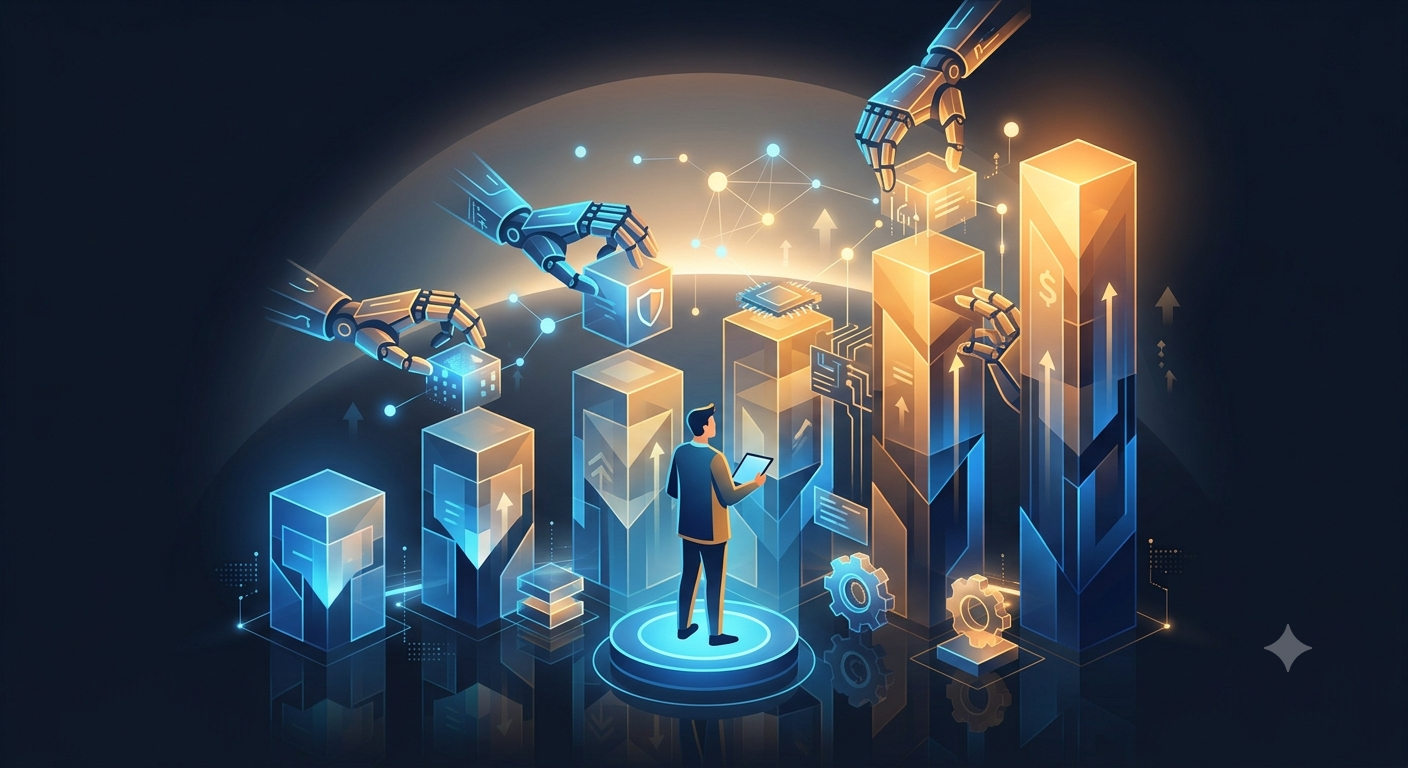
Before going further, it helps to reset expectations. AI is a productivity multiplier, not a money-printing machine. It speeds up work that used to take hours, but it does not create value out of nothing.
Think of AI as a faster engine, not a destination. A faster engine only matters if it is attached to a vehicle that is actually going somewhere. Similarly, AI only matters if it is powering something you own.
AI Speeds Up Execution
AI tools can draft articles, generate images, summarize research, and write code in minutes. Consequently, tasks that once took a full workday can now take an hour. That said, speed alone does not guarantee income, which is another reason AI doesn’t make you rich without a real asset attached to that speed.
AI Lowers the Barrier to Entry
Because AI reduces the technical and creative skill required to start, more people than ever can launch a blog, a newsletter, or a small software tool. However, lower barriers also mean more competition, which is exactly why ownership matters more than access to tools. Access alone proves that AI doesn’t make you rich; execution and ownership do.
AI Is Not a Business Model
Many beginners mistakenly treat “using AI” as if it were a business itself. In reality, AI is infrastructure. Therefore, the real business is whatever asset you build using that infrastructure—a website, a product, or a brand.
Consider the electricity grid as a comparison. Electricity did not make any single person wealthy just because it existed. Instead, the businesses that plugged into it and built factories, stores, and services became the ones that generated lasting income. AI works the same way: it is the power source, not the product.
Why the Hype Persists
Part of the reason so many people believe AI doesn’t make you rich claims are exaggerated is because of how AI is marketed online. Flashy screenshots of income claims spread quickly, yet they rarely show the underlying asset, audience, or years of groundwork behind them. Recognizing this pattern early helps beginners avoid wasted time and misplaced expectations.
Why Ownership Creates Wealth
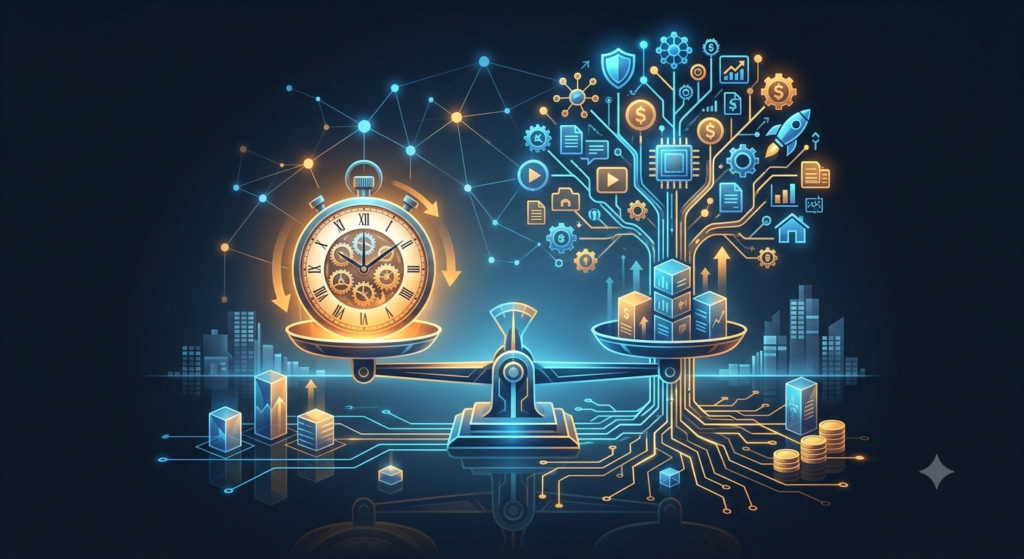
Here is the core idea of this entire article: AI doesn’t make you rich, but owning income-producing assets does. This distinction changes everything about how you should approach digital business in 2026 and beyond.
Ownership means you control something that generates value over time, independent of how many hours you personally work. A website that ranks on Google, a course that sells while you sleep, or a brand with a loyal audience—these are assets. AI can help you build them faster, but it cannot replace the asset itself.
Assets Appreciate. Labor Does Not.
When you sell your time, your income stops the moment you stop working. On the other hand, when you own an asset, it can keep producing value long after the initial effort. This is precisely why AI doesn’t make you rich through labor alone; wealth comes from what you build and keep.
Ownership Compounds
A blog post written this year can still bring in traffic three years from now. Likewise, a digital product created once can be sold repeatedly. Over time, these small wins stack, and the compounding effect becomes the real driver of financial freedom.
This is similar to how compound interest works in investing. A single deposit does not create wealth overnight, but consistent contributions over time grow into something significant. Digital assets behave the same way: each new article, video, or product adds to a foundation that keeps paying off long after the work is done.
The Difference Between Workers and Owners
Understanding the gap between working for income and owning income is essential for anyone serious about wealth building.
Workers Trade Time for Money
A worker, whether employed or freelancing, exchanges hours for a paycheck. Even highly paid freelancers using AI tools to work faster are still trading time, just more efficiently. As a result, their income has a ceiling tied directly to the hours available in a day.
Owners Build Systems That Work Without Them
An owner, by contrast, builds something once and benefits from it repeatedly. For example, a course creator records a lesson a single time, yet it can be sold to thousands of students. This is the ownership economy in action, and it is where AI adds the most long-term value—not in replacing the owner, but in helping the owner build faster.
Why This Matters More in the AI Era
Because AI can now perform many tasks that used to require a hired freelancer, the value of pure labor is shifting downward. Meanwhile, the value of owning a distribution channel, a brand, or a product is rising. In short, AI doesn’t make you rich if you only use it to work faster as an employee; it makes owners richer because they can now build and scale with fewer resources.
Digital Assets Anyone Can Build
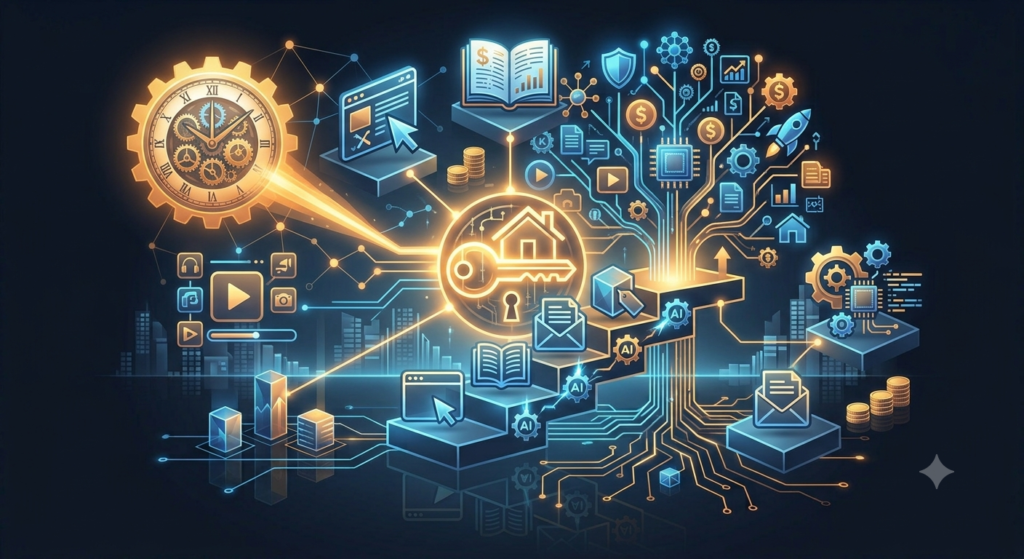
The good news is that building digital assets has never been more accessible. Below are the most beginner-friendly options, many of which can be started with little to no upfront cost.
Websites and Blogs
A niche website focused on a specific topic can generate income through advertising, affiliate marketing, and product sales. Additionally, blogs remain one of the most durable digital assets because organic search traffic keeps flowing long after publication—clear proof that AI doesn’t make you rich, but an owned website can.
YouTube Channels
Video content builds trust quickly and can be monetized through ads, sponsorships, and product promotion. Furthermore, YouTube’s search engine rewards consistency, meaning older videos continue attracting views for years, another example of why AI doesn’t make you rich but an owned channel does.
Online Courses and E-books
Packaging your knowledge into a course or e-book turns expertise into a repeatable product. Once created, these digital products can be sold indefinitely without requiring additional production time, which is precisely the kind of asset that proves AI doesn’t make you rich on its own.
Email Newsletters
Owning an email list means owning direct access to your audience, unaffected by social media algorithm changes. As a result, newsletters have become one of the most valuable digital assets for creators and small business owners alike, reinforcing that AI doesn’t make you rich without owned distribution.
SaaS and Software Tools
With AI-assisted coding, building a small software tool is more achievable than ever, even for non-technical founders. Subscription-based software can create predictable, recurring revenue, yet again showing that AI doesn’t make you rich by itself; the owned product does.
Templates and Digital Downloads
Simple digital products like templates, planners, and spreadsheets require minimal production time yet can be sold repeatedly. Notably, this is one of the fastest ways for beginners to test digital ownership without heavy investment, since AI doesn’t make you rich until the product actually exists and sells.
Membership Communities
Paid communities built around a shared interest or professional niche can generate predictable monthly revenue while also deepening relationships with your most engaged followers. Additionally, communities tend to have strong retention once trust is established, which makes them a stable long-term asset—again showing that AI doesn’t make you rich, but a loyal community does.
Personal Brands and Intellectual Property
Your name, reputation, and unique perspective are assets in themselves, even before any product exists. Over time, a recognizable personal brand opens doors to partnerships, licensing deals, and premium pricing that generic, faceless content rarely achieves, which is the clearest sign that AI doesn’t make you rich; a trusted brand does.
How AI Helps You Build Faster
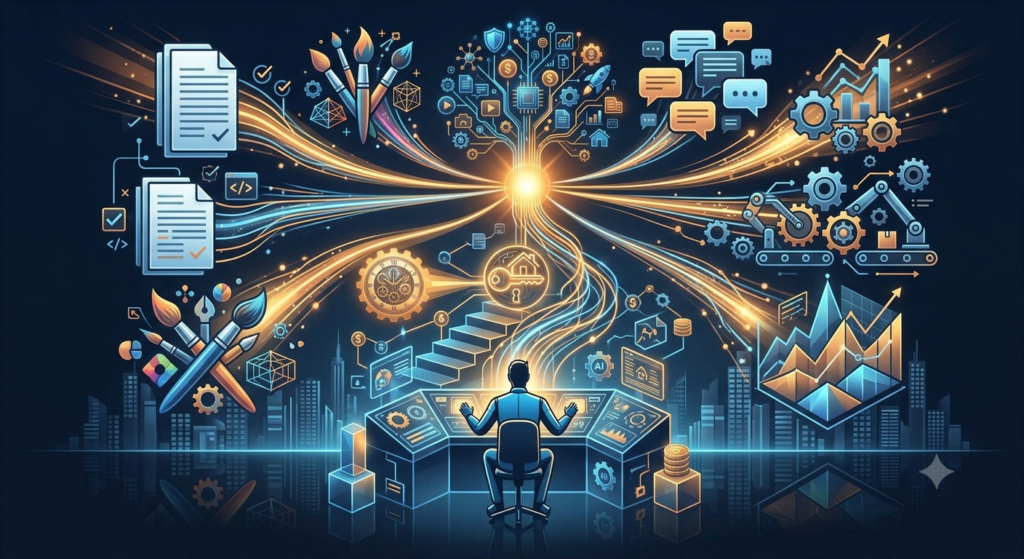
While AI doesn’t make you rich by itself, it dramatically shortens the time between an idea and a finished asset. Here is where it genuinely shines.
Writing and Content Creation
AI tools can draft blog posts, product descriptions, and scripts in a fraction of the time it used to take. Consequently, creators can publish more consistently, which directly supports SEO growth and audience building.
Research and Market Validation
Instead of spending days researching a niche, AI can summarize competitor content, identify content gaps, and highlight trending topics within minutes. Therefore, decision-making becomes faster and more informed.
Design and Branding
AI-powered design tools allow beginners to create logos, thumbnails, and graphics without hiring a designer. As a result, launching a professional-looking brand no longer requires a large budget.
Marketing and Customer Support
Chatbots and AI-driven email sequences can handle customer questions and nurture leads automatically. Meanwhile, this frees up time for the owner to focus on strategy and growth instead of repetitive tasks.
Coding and Automation
AI coding assistants make it possible to build simple apps, automate workflows, and fix bugs without years of programming experience. Because of this, technical barriers that once stopped beginners from building software are shrinking rapidly.
Content Repurposing
A single article can be turned into social media posts, video scripts, and email newsletters using AI, multiplying its reach without multiplying the effort. This is one of the clearest examples of AI amplifying an existing asset rather than creating one from scratch.
Data and Performance Analysis
AI can also help interpret analytics, spot which content resonates most with an audience, and suggest where to focus future effort. Consequently, creators can make faster, more confident decisions instead of guessing what to build next, which is one more case where AI doesn’t make you rich, but data-informed ownership does.
Mistakes Beginners Make
Even with the best intentions, many beginners fall into predictable traps that keep them stuck.
Chasing Every New AI Tool
Jumping from tool to tool wastes time and prevents any real asset from being built. Instead, choosing one or two tools and mastering them produces far better results—another reminder that AI doesn’t make you rich, focused execution does.
Depending on a Single Platform
Building an entire business around one social media algorithm is risky, since platforms change their rules without warning. Owning a website or email list provides a safety net that a rented platform never can, since AI doesn’t make you rich if the platform it lives on disappears overnight.
Ignoring the Audience
Many beginners focus entirely on production and forget to build genuine relationships with their audience. However, audience trust is often more valuable than the content itself, proving once more that AI doesn’t make you rich without real human connection.
Copying Competitors Instead of Innovating
While studying competitors is useful, copying their content word-for-word rarely leads to long-term success. Original insight, even in a crowded niche, tends to outperform imitation.
Expecting Overnight Success
Perhaps the biggest misconception is believing that AI doesn’t make you rich slowly—it makes you rich instantly. In reality, most successful digital assets take months, sometimes years, of consistent effort before they produce meaningful income.
Skipping the Foundation for Shortcuts
Some beginners search endlessly for a hidden shortcut instead of learning core skills like writing, marketing, or basic design. However, AI works best as an amplifier of skill, not a substitute for it, so skipping the foundation usually slows progress rather than speeding it up.
Underpricing Their Work
Finally, many new creators undervalue their digital products out of fear that no one will pay for them. As a result, they attract the wrong audience and struggle to reinvest in growth, when a fair price paired with real value would serve them better.
A Practical Roadmap
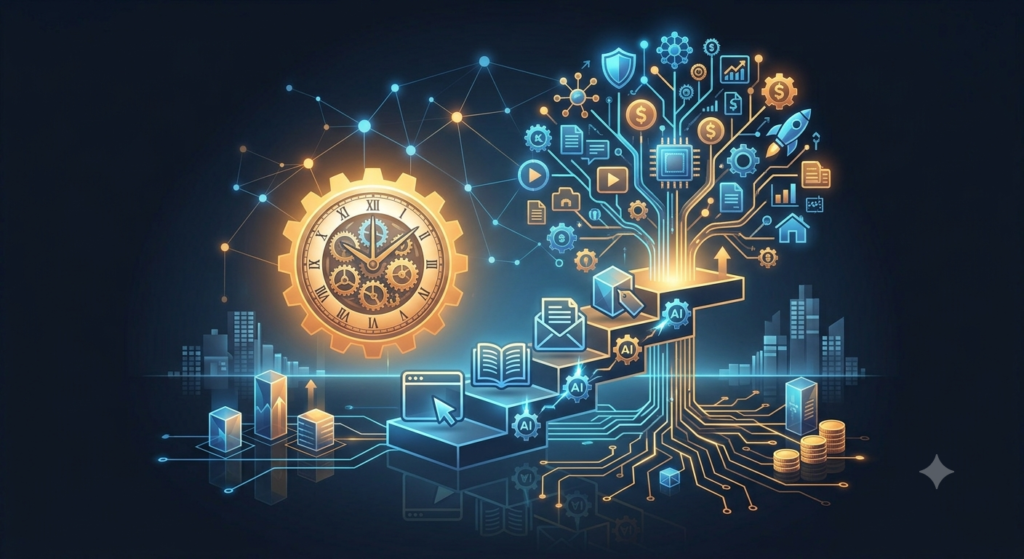
If you are ready to move from theory to action, follow this beginner-friendly roadmap.
Step 1: Learn One Valuable Skill
Choose a skill such as writing, video editing, or basic design, and commit to improving it consistently. This skill becomes the foundation for everything you build afterward, because AI doesn’t make you rich without a skill behind the asset.
Step 2: Choose One Digital Asset
Rather than spreading yourself across ten ideas, pick a single asset—a blog, a YouTube channel, or a digital product—and commit fully. Focus dramatically increases your odds of success.
Step 3: Use AI to Increase Productivity
Once your direction is clear, use AI tools to speed up research, writing, and design. Remember, the goal is acceleration, not replacement of your judgment, since AI doesn’t make you rich on autopilot.
Step 4: Publish Consistently
Consistency signals reliability to both your audience and search engines like Google. Therefore, a regular publishing schedule, even a modest one, outperforms sporadic bursts of effort.
Step 5: Build an Audience
Prioritize collecting email subscribers and engaged followers, since this audience is the true long-term asset. Additionally, an engaged audience makes every future product launch significantly easier.
Step 6: Create Multiple Income Streams
Once your first asset gains traction, diversify into affiliate marketing, digital products, or sponsorships. As a result, your income becomes more stable and less dependent on a single source.
Step 7: Reinvest Profits
Finally, reinvest early earnings into better tools, outsourced help, or paid promotion. Over time, this reinvestment cycle accelerates growth far beyond what the original effort alone could achieve.
Staying Patient Through the Process
It is worth repeating that this roadmap is not a guarantee of quick results. Some months will feel slow, and progress may not always be visible right away. However, each step builds on the last, and creators who stick with the process consistently tend to outperform those who restart with a new idea every few weeks—living proof that AI doesn’t make you rich overnight; patience and ownership do.
The Future of AI and Ownership
Looking ahead, the gap between renters and owners in the digital economy is likely to widen. As AI continues to lower production costs, the people who already own audiences, brands, and platforms will be positioned to scale fastest.
Meanwhile, those without owned assets may find themselves competing in an increasingly crowded, AI-saturated content landscape. Consequently, the next decade will likely reward early asset builders more than late adopters chasing the latest tool.
This is exactly why AI doesn’t make you rich passively; it rewards those who actively use it to build something they own. Ownership, not access to technology, will remain the deciding factor in long-term financial outcomes.
Additionally, as more content is produced with AI assistance, originality and trust will likely become even more valuable differentiators. Readers, viewers, and customers will gravitate toward creators and brands that feel authentic and consistent, which favors those who have already invested in building a real audience rather than simply publishing volume.
Conclusion
AI doesn’t make you rich on its own, no matter how advanced the technology becomes. What actually builds lasting wealth is ownership—of a website, a brand, a product, or an audience that keeps generating value over time.
AI is a powerful accelerator, and ignoring it would be a mistake. However, treating it as a shortcut to riches, rather than a tool for building real assets, is where most beginners go wrong.
If you take one lesson from this article, let it be this: stop chasing tools, and start building assets. Choose one digital asset today, use AI to move faster, and commit to consistency. That decision, more than any single AI tool, is what will move you closer to real financial freedom.